Best Wok for Electric Stove: 7 Flat-Bottom Woks That Actually Get Hot
Last updated: October 10, 2026 · Product details checked on Amazon.com
Quick answer: The best wok for an electric stove is a flat-bottomed carbon steel wok, because it sits flush on the element and heats quickly. The YOSUKATA 13.5″ pre-seasoned wok is our top pick for most kitchens. Choose the Craft Wok 14″ for a heavy traditional wok, the Lodge cast iron wok for maximum heat retention, or the Calphalon Signature if you don’t want to season anything.
Top Picks at a Glance
| Best overall | YOSUKATA 13.5″ Flat Bottom Carbon Steel — pre-seasoned, light, fast |
| Best traditional | Craft Wok 14″ Hand-Hammered — thick 1.8 mm steel |
| Best value | Babish 14″ Carbon Steel — 6″ flat base, listed for glass tops |
| Best heat retention | Lodge 14″ Cast Iron — stays hot when food goes in |
| Best nonstick | Calphalon Signature 12″ — no seasoning needed |
| Best stainless | All-Clad D3 14″ — tri-ply, dishwasher-safe |
Stir-frying on an electric stove has a reputation for being disappointing, and most of that comes down to one mistake: using a round-bottomed wok. A traditional round wok sits in a ring of flame on a gas burner, but on a flat coil or glass top it only touches the element at a single point. Heat barely gets in, the pan wobbles, and your stir-fry steams instead of sizzling.
Switch to a flat-bottomed wok and the picture changes. The base presses against the heating element, heat transfers efficiently, and you can get genuinely good browning at home. The rest of the decision is about material: carbon steel for speed, cast iron for stored heat, nonstick or stainless for easy care. Below we compare seven woks you can buy on Amazon.com and explain who each one suits.
How We Picked These Woks
We don’t take free products or paid placements. For this guide we checked each wok’s Amazon listing, rating and review count in October 2026, compared material, thickness, base shape and cooktop compatibility, and read owner reviews for recurring praise and complaints from electric-stove users. We haven’t run our own lab tests, so we describe what the specifications and owner feedback consistently show.
Which Wok Is Best for an Electric Stove?
A flat-bottom carbon steel wok is best for most electric stoves because it heats fast and makes full contact with the element. The YOSUKATA 13.5″ suits most cooks, the Craft Wok and Babish are strong carbon steel alternatives, Lodge cast iron holds the most heat, and Calphalon, All-Clad and HexClad suit people who don’t want to season.
1. Best Overall: YOSUKATA 13.5″ Pre-Seasoned Flat Bottom Wok
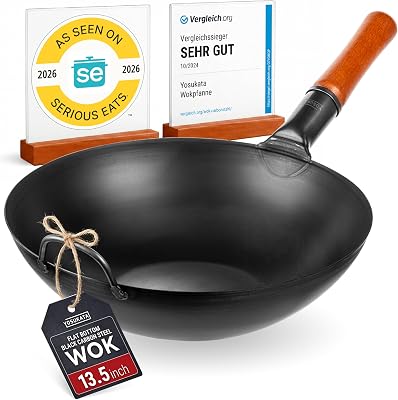

YOSUKATA 13.5″ Pre-Seasoned Flat Bottom Carbon Steel Wok
A flat-bottomed carbon steel wok that arrives pre-seasoned, so you can start cooking sooner. Carbon steel heats fast and responds quickly when you change the burner setting — the closest you’ll get to restaurant-style stir-frying on a flat electric element.
- 13.5″ black carbon steel, flat bottom
- Pre-seasoned at high heat by the maker
- Listed for stir-frying, searing, braising, deep-frying and steaming
- Works on electric, gas and induction (carbon steel is magnetic)
- ✅ Flat base sits firmly on coil and smooth-top elements
- ✅ Lighter than cast iron — easy to toss
- ✅ Seasoning improves with every use
- ❌ Needs hand washing, drying and oiling
- ❌ Pre-seasoning is a starting layer — expect to build it up
The YOSUKATA earns the top spot because it removes the two biggest hurdles for first-time wok owners. It’s flat-bottomed, so it sits properly on a coil or smooth-top element, and it arrives pre-seasoned, so you can cook on day one instead of spending an evening building a patina. With more than 5,500 ratings, it also has one of the largest owner bases of any carbon steel wok.
Carbon steel is the right material for electric stoves because it’s thin and conductive. When you turn the dial up, the pan responds quickly, and when food goes in, it recovers faster than a thick nonstick pan. Owners consistently describe it as light enough to toss and lift with one hand. The most common complaint is that the factory seasoning is a starting layer, not a finished nonstick surface — expect to cook a few oily meals before eggs and noodles release cleanly.
Who should skip it: anyone who wants a dishwasher-safe, no-maintenance pan. Carbon steel needs hand washing, drying and a light coat of oil after each use.
2. Best Traditional Wok: Craft Wok 14″ Hand-Hammered


Craft Wok 14″ Hand-Hammered Carbon Steel Wok (Flat Bottom)
A heavy-gauge, hand-hammered wok made in Guangzhou and sold since 2014. At 1.8 mm thick and about 4.6 lb, it holds heat better than thin woks — useful on electric stoves, which can’t blast heat as fast as gas.
- 14″ carbon steel, 15 gauge (1.8 mm)
- Flattened bottom for electric and induction (maker notes a slight dome that settles)
- Wooden main handle + steel helper handle
- About 4.6 lb
- ✅ Thick steel stores heat for searing
- ✅ Traditional hammered shape
- ✅ Helper handle makes lifting easier
- ❌ Arrives unseasoned — you must season it first
- ❌ Heavier than pre-seasoned thin woks
Craft Wok’s hand-hammered pan is the choice for cooks who want a wok that feels like the real thing. It’s made from 15-gauge (1.8 mm) carbon steel — thicker than many home woks — and weighs about 4.6 pounds. That extra metal matters on electric stoves: a thicker base stores more heat, so it doesn’t cool down as much when you add a pile of cold vegetables.
Two honest caveats come straight from the listing. First, the base is flattened but not perfectly flat; the maker says it has a slight dome that settles with use, so it may rock a little on a glass top at first. Second, it arrives unseasoned with a protective coating you need to remove before seasoning. If that sounds like a project you’ll enjoy, our step-by-step guide to seasoning a wok walks through it.
3. Best Value: Babish 14″ Carbon Steel Wok


Babish 14″ Carbon Steel Wok (6″ Flat Bottom)
A value carbon steel wok with a 6-inch flat base, riveted wooden handles and a listing that names gas, electric, ceramic, glass and induction cooktops. A sensible first wok for an electric kitchen.
- 14″ heavy-gauge carbon steel
- 6″ flat bottom
- Riveted wooden handles
- Listed for gas, electric, ceramic, glass and induction
- ✅ Budget-friendly price tier
- ✅ Explicitly listed for glass and ceramic tops
- ✅ Two handles for steadier lifting
- ❌ Needs seasoning and regular oiling
- ❌ Wooden handles mean no oven use
The Babish wok is the easiest recommendation for a tight budget. It has a 6-inch flat base, heavy-gauge carbon steel and riveted wooden handles, and its listing specifically names electric, ceramic, glass and induction cooktops. That clear compatibility statement is reassuring if you have a smooth glass top and are nervous about using a wok on it.
It needs the same care as any carbon steel pan: season it, keep it dry and oil it lightly after washing. The wooden handles stay cooler than steel, but they also mean the wok can’t go in the oven.
4. Best Heat Retention: Lodge 14″ Cast Iron Wok


Lodge 14″ Cast Iron Wok
Lodge’s cast iron wok is pre-seasoned, PFAS-free and very slow to cool down. On an electric coil that struggles to recover after you add cold food, that stored heat is an advantage — but it’s heavy and slow to adjust.
- 14″ cast iron with dual loop handles
- Pre-seasoned with vegetable oil
- Listed as PFAS-free
- Holds heat in the base and sidewalls
- ✅ Excellent heat retention on weak burners
- ✅ Pre-seasoned and very durable
- ✅ Doubles as a serving vessel
- ❌ Heavy — not for tossing
- ❌ Slow to heat and slow to cool down
Electric elements struggle with one thing above all: recovery. Add a pound of cold chicken to a thin pan and the temperature drops, and the element can’t push heat back fast enough. Cast iron solves this differently — it stores so much heat that the drop is smaller. That’s why the Lodge cast iron wok has fans among electric-stove owners, especially those with older coil ranges.
The trade-offs are weight and speed. It takes a long time to preheat, it’s too heavy to toss, and it stays hot long after you turn the burner off. Use it for big-batch stir-fries, deep-frying and braises rather than fast, tossed dishes. If you have a glass top, lift it rather than slide it. If you already love cast iron, our cast iron skillet guide covers the same care routine.
5. Best Nonstick: Calphalon Signature 12″ Flat-Bottom Wok
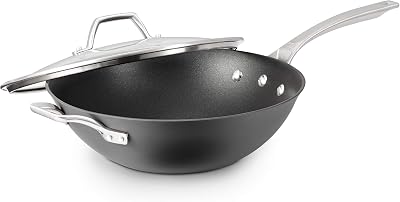

Calphalon Signature 12″ Hard-Anodized Nonstick Flat-Bottom Wok
If you’d rather skip seasoning, this flat-bottomed nonstick wok is the low-maintenance pick. Heavy-gauge hard-anodized aluminum heats evenly on electric elements, and it’s oven-safe to 500°F.
- 12″ hard-anodized aluminum, flat bottom
- 3-layer PFOA-free nonstick interior (metal-utensil-safe per Calphalon)
- Oven-safe to 500°F
- Long stainless handles
- ✅ No seasoning needed
- ✅ Even heating, easy cleanup
- ✅ Highest rating in this guide
- ❌ Nonstick shouldn’t be run at very high heat
- ❌ Aluminum isn’t induction-compatible unless the listing says so
Not everyone wants to season and oil a pan. The Calphalon Signature is a flat-bottomed, hard-anodized nonstick wok that heats evenly on electric elements, cleans up in seconds and is oven-safe to 500°F. It has the highest rating in this guide, and owners like it for fried rice, scrambled eggs and anything that tends to stick.
Nonstick has limits for stir-frying: high empty-pan heat shortens the life of the coating, so you won’t get the smoky, scorched edges of carbon steel. Keep it to medium-high, preheat with oil in the pan, and follow our guide to cleaning nonstick pans to make the coating last. Aluminum also isn’t magnetic, so check the listing before buying for an induction cooktop.
6. Best Stainless Steel: All-Clad D3 14″ Wok


All-Clad D3 14″ Stainless Steel Wok with Lid
A premium tri-ply stainless wok with a flat base for stability and a large searing surface. No seasoning and no coating — just bonded stainless and aluminum that heats evenly and goes in the dishwasher.
- 14″ tri-ply stainless steel with aluminum core
- Flat bottom with deep sloped sides
- Lid included
- Made in the USA (Pennsylvania) per All-Clad
- ✅ No coating, no seasoning
- ✅ Very even heating
- ✅ Built to last decades
- ❌ Premium price tier
- ❌ Food sticks unless you preheat and use enough oil
The All-Clad D3 wok is tri-ply stainless steel with an aluminum core, made in Pennsylvania. Its flat base gives stability and a large searing area, while the deep, sloped sides make tossing easier than in a sauté pan. There’s no coating to wear out and no seasoning to maintain, and the lid is included.
Stainless has a learning curve: food sticks unless the pan is properly preheated and has enough oil. It has a much smaller review base than the other picks, and it sits in the premium price tier, but it’s the one wok here you could reasonably expect to last for decades.
7. Best Compact Wok: HexClad 10″ Hybrid Wok


HexClad 10″ Hybrid Wok
A compact hybrid wok that combines a stainless steel grid with a ceramic nonstick coating. The 10-inch size suits one or two people and small electric burners.
- 10″ tri-ply with aluminum core
- Hybrid stainless + TerraBond ceramic surface
- Induction-ready; dishwasher and oven safe per HexClad
- Lid not included
- ✅ Fits small burners well
- ✅ Low maintenance
- ✅ Works on every cooktop type
- ❌ Small for family stir-fries
- ❌ No lid in the box
HexClad’s 10-inch wok is small by wok standards, which is exactly why it works on small electric burners: the whole base sits on the element. Its hybrid surface combines a raised stainless grid with ceramic nonstick, and HexClad lists it as induction-ready and dishwasher-safe. It’s a good fit for quick fried rice for one or two people; for family stir-fries, choose a 13–14-inch wok instead. Note that a lid isn’t included.
How Do These Woks Compare?
Carbon steel woks (YOSUKATA, Craft Wok, Babish) heat fastest and suit high-heat stir-frying. Lodge cast iron holds the most heat but is heavy. Calphalon nonstick and HexClad hybrid need the least care, while All-Clad stainless avoids coatings entirely. All seven have flat bases for electric elements.
| Wok | Material | Size | Seasoning? | Rating | Price tier | Amazon |
|---|---|---|---|---|---|---|
| YOSUKATA | Carbon steel | 13.5″ | Pre-seasoned | 4.2★ | Mid | Check price |
| Craft Wok | Carbon steel, 1.8 mm | 14″ | Yes, required | 4.4★ | Mid | Check price |
| Babish | Carbon steel | 14″ (6″ base) | Yes | 4.4★ | Budget | Check price |
| Lodge | Cast iron | 14″ | Pre-seasoned | 4.6★ | Mid | Check price |
| Calphalon Signature | Hard-anodized nonstick | 12″ | No | 4.7★ | Mid | Check price |
| All-Clad D3 | Tri-ply stainless | 14″ | No | 4.3★ | Premium | Check price |
| HexClad | Hybrid stainless/ceramic | 10″ | No | 4.4★ | Upper mid | Check price |
Ratings checked on Amazon.com in October 2026. Prices change frequently, so we list price tiers — check the current price on Amazon.
How Do You Choose a Wok for an Electric Stove?
Choose a flat-bottom wok whose base is close to the size of your largest burner, made of carbon steel for responsiveness or cast iron for stored heat. A 12–14-inch diameter suits most households. Check cooktop compatibility for glass or induction, and pick nonstick or stainless only if you want to avoid seasoning.
Why Does the Bottom Shape Matter So Much?
Electric elements transfer heat mostly by direct contact. A round-bottom wok touches a flat element at one small point, so most of the pan never gets hot. A flat-bottom wok puts several inches of metal against the coil or glass, which is where the heat actually comes from. Our explainer on whether woks work on electric stoves goes deeper into the physics and the workarounds.
Carbon Steel, Cast Iron, Nonstick or Stainless?
- Carbon steel: thin, fast and responsive; the classic wok material. Needs seasoning.
- Cast iron: holds lots of heat, which helps weak elements; heavy and slow.
- Nonstick: easy cleanup, no seasoning; avoid very high heat to protect the coating.
- Stainless (tri-ply): no coating or seasoning, dishwasher-safe; food sticks without good technique.
What Size Wok Should You Get?
For most households, a 13–14-inch wok is the sweet spot: big enough to toss food for three or four people, small enough for a standard burner. The flat part of the base should be close to the diameter of your biggest element — a 6-inch flat base on an 8-inch element is ideal. Singles and couples with small burners may prefer a 10–12-inch wok.
Do You Have a Glass Top, Coil or Induction Stove?
Coil burners are the most forgiving and work with every wok here. Smooth glass and ceramic tops need a truly flat base and some care: lift rather than slide, keep the base clean and avoid dropping heavy cast iron. Induction needs a magnetic base — carbon steel, cast iron, magnetic stainless and HexClad work; plain aluminum doesn’t. We cover smooth tops in detail in how to use a wok on a glass top stove.
How Much Maintenance Will You Do?
Be honest about this one. Carbon steel and cast iron reward care with a slick, durable surface, but they rust if left wet. If you know you’ll toss pans in the dishwasher, choose stainless or a dishwasher-safe hybrid instead. If you’re curious whether a wok is worth it over the skillet you already own, read our wok vs frying pan comparison.
How Do You Get Better Stir-Fry Results on an Electric Stove?
Preheat the wok fully before adding oil, cook in small batches, prep everything before you start, use high-smoke-point oil, and keep food moving. Because electric elements recover heat slowly, smaller batches and a thorough preheat matter more than on gas. Removing ingredients and recombining them at the end prevents steaming.
- Preheat longer than you think. Give carbon steel 3–5 minutes on high and cast iron longer, until a drop of water skitters and evaporates.
- Prep first. Stir-frying is fast; have everything cut and sauces mixed before the wok is hot.
- Cook in batches. Half a pound of protein at a time keeps the pan hot enough to sear.
- Dry your ingredients. Wet vegetables drop the temperature and steam.
- Use two burners if needed. Some cooks keep a second element hot and move the wok between them to speed recovery.
Our full technique guide, do woks work on electric stoves, includes a step-by-step method for coil and glass tops.
What Mistakes Should You Avoid When Buying a Wok?
The biggest mistakes are buying a round-bottom wok for an electric stove, choosing a flat base much larger or smaller than your burner, buying thin nonstick for high-heat stir-frying, ignoring induction compatibility, and buying carbon steel when you won’t maintain it. Matching base shape, size and material to your stove avoids most regrets.
- Round bottom on a flat element: poor contact and wobbling — even with a wok ring.
- Too big a wok for a small burner: only the center gets hot.
- Thin, cheap nonstick: coatings dislike high empty heat, which is exactly what stir-frying uses.
- Skipping the care routine: carbon steel left wet will rust; it’s fixable, but avoidable.
Final Verdict: Which Wok Should You Buy for Your Electric Stove?
For most people cooking on electric, the YOSUKATA 13.5″ flat-bottom carbon steel wok is the best balance of speed, weight and convenience. Want a thicker, more traditional pan and don’t mind seasoning? Choose the Craft Wok. On a budget or a glass top, the Babish is easy to recommend. For weak coil burners, the Lodge cast iron wok’s stored heat helps. And if you never want to season a pan, pick the Calphalon Signature or All-Clad D3.
| If you want… | Choose | Link |
|---|---|---|
| The best all-rounder | YOSUKATA 13.5″ | View on Amazon |
| A heavy traditional wok | Craft Wok 14″ | View on Amazon |
| The lowest price | Babish 14″ | View on Amazon |
| Maximum stored heat | Lodge cast iron | View on Amazon |
| No seasoning at all | Calphalon Signature | View on Amazon |
Frequently Asked Questions
Can you use a wok on an electric stove?
Yes. Use a flat-bottomed wok so the base makes full contact with the element, preheat it thoroughly, and cook in smaller batches. Round-bottom woks perform poorly on electric stoves because they only touch the element at one point.
Is carbon steel or cast iron better for an electric stove?
Carbon steel is better for most people because it heats quickly and is light enough to toss. Cast iron holds more heat, which helps weak coil burners recover after you add food, but it’s heavy and slow to heat and cool.
What size wok is best for an electric stove?
A 13–14-inch wok suits most households. More important is the flat base: it should be close to the size of your largest burner, typically around 5–7 inches, so the whole bottom heats evenly.
Is a wok safe on a glass top stove?
Yes, with a flat-bottomed wok. Lift it rather than slide it, keep the base clean and dry, and avoid dropping heavy cast iron. Choose a wok whose listing names glass or ceramic cooktops if you want extra reassurance.
Do you need a wok ring on an electric stove?
Not with a flat-bottom wok. A wok ring holds a round-bottom wok steady, but it lifts the pan away from the element, which reduces heat even further on electric. A flat-bottom wok sitting directly on the burner works better.
Are nonstick woks good for stir-frying?
They’re convenient and easy to clean, but nonstick coatings don’t like very high empty-pan heat, which is how stir-frying works best. Use nonstick at medium-high with oil added before heating, or choose carbon steel for true high-heat cooking.
Which wok works on induction?
Woks with a magnetic base work on induction: carbon steel, cast iron, many stainless steel woks and hybrid pans like HexClad. Plain aluminum woks don’t work unless they have a bonded steel plate — check the listing.