
How to Sanitize Baby Bottles: 4 Safe Methods (CDC-Based Guide)
Last updated: November 12, 2026 · Product details checked on Amazon.com
Quick answer: To sanitize baby bottles, first wash and rinse every part, then use one of four methods: boil the parts for 5 minutes, use a steam sterilizer, run a dishwasher with a hot-water and heated-dry or sanitize cycle, or, if none of those is possible, soak for at least 2 minutes in 2 teaspoons of unscented bleach per gallon of water. Air-dry before storing.
Sanitizing kills germs that ordinary washing may leave behind, and it matters most in the first weeks of life. The good news is that it doesn’t have to be complicated. Once you know which method suits your kitchen and routine, it becomes a quick daily habit.
This guide follows the U.S. Centers for Disease Control and Prevention (CDC) guidance for infant feeding items. It explains each sanitizing method step by step, how often you really need to sanitize, and how to dry and store bottles so they stay clean. Always check your bottle manufacturer’s instructions too, because some materials can’t handle boiling or high heat.


Dr. Brown’s All-in-One Sterilizer and Dryer
An electric steam sterilizer that also dries bottles, so parts come out sanitized and ready to store without towel drying.
- Steam sterilize and dry
- Holds several bottles and parts
- Auto shut-off
- Works with most bottle brands
- ✅ Hands-off sanitizing
- ✅ Built-in drying
- ✅ Highly rated
- ❌ Takes counter space
How We Put This Guide Together
We based the steps on CDC guidance for cleaning, sanitizing and storing infant feeding items, cross-checked with Mayo Clinic advice, then compared popular sanitizing products using manufacturer specifications and verified owner reviews. This guide is general information, not medical advice; ask your pediatrician about your baby’s specific needs.
Product recommendations are based on specifications and owner feedback rather than hands-on testing. We favour tools with long rating histories and clear instructions.
Do You Need to Sanitize Baby Bottles?
The CDC recommends cleaning feeding items after every use and sanitizing at least once a day if your baby is under 2 months old, was born prematurely or has a weakened immune system. For older, healthy babies, daily sanitizing may not be necessary if bottles are cleaned carefully after each feed.
New bottles should be sanitized before their first use. It’s also sensible to sanitize after your baby has been ill, or if bottles have been stored for a long time. Remember to sanitize the tools you clean with as well, including the bottle brush and wash basin, because they can harbour germs too.
Step 1: How Do You Wash Bottles Before Sanitizing?
Wash your hands, take every bottle apart, and rinse the parts under running water. Place them in a clean basin used only for feeding items, not directly in the sink. Scrub with hot soapy water and a dedicated bottle brush, squeeze water through nipple holes, then rinse again.
Sanitizing doesn’t replace washing. Milk residue and fat can shield germs from heat or bleach, so a thorough clean comes first. A dedicated brush with a nipple cleaner makes this much easier and keeps the brush separate from your regular dish tools.


OXO Tot Bottle Brush with Stand (2-Pack)
A dedicated bottle brush with a built-in nipple cleaner and a stand that keeps bristles off the counter between washes.
- Bottle brush plus nipple cleaner
- Drying stand
- Pack of two
- Non-scratch bristles
- ✅ Essential cleaning tool
- ✅ Hygienic storage
- ❌ Replace brushes regularly
Method 1: How Do You Sanitize Bottles by Boiling?
Put the clean, disassembled parts in a pot and cover them completely with water, making sure no air is trapped inside bottles. Bring the water to a boil and boil for 5 minutes. Turn off the heat and lift the items out with clean tongs, then let them air-dry.
Boiling costs nothing and needs only a pot, which makes it a reliable backup even if you own a sterilizer. Check that your bottles and nipples are labelled safe for boiling, because repeated boiling can wear silicone and some plastics over time. Keep a dedicated pot for this job if you can.
Method 2: How Do You Sanitize Bottles With Steam?
Use an electric steam sterilizer or a microwave steam bag. Load the clean parts, add water as the instructions describe, and run the cycle. Electric units often dry the parts too. Microwave bags take a few minutes and are ideal for travel or small kitchens.
Steam is fast, chemical-free and gentle on most bottle materials. An electric sterilizer suits families sanitizing daily, while bags are cheap and portable for visiting relatives or traveling.
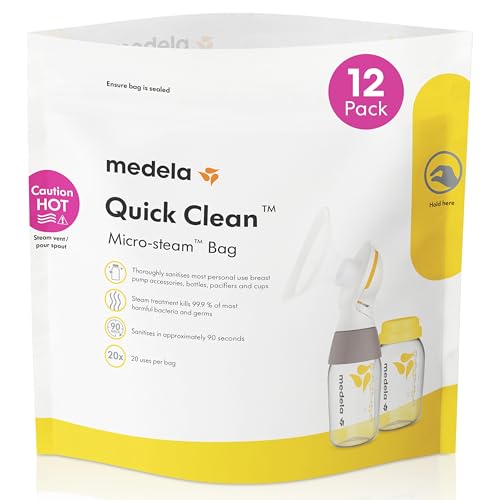

Medela Quick Clean Micro-Steam Bags (12 Count)
Microwave steam bags that sanitize bottles and pump parts in a few minutes, ideal for travel, small spaces and occasional sanitizing.
- Microwave steam
- Each bag reusable up to 20 times
- Fits bottles and pump parts
- 12 bags per box
- ✅ Cheap and portable
- ✅ Very fast
- ❌ Needs a microwave
- ❌ Bags wear out


Dr. Brown’s Microwave Steam Sterilizer Bag
A reusable microwave steam bag that packs flat, a low-cost way to sanitize at home or while visiting family.
- Microwave steam
- Reusable bag
- Packs flat
- Fits bottles and parts
- ✅ Budget-friendly
- ✅ Great for travel
- ❌ Smaller capacity
To compare electric options in detail, see our guide to the best electric baby bottle sterilizers, which looks at capacity, drying and counter footprint.
Method 3: Can You Sanitize Bottles in the Dishwasher?
Yes, if your dishwasher uses hot water and a heated drying cycle or a sanitize setting. According to the CDC, that combination sanitizes feeding items, so a separate step isn’t needed. Place small parts in a closed-top basket or mesh bag, and only wash items labelled dishwasher-safe.
Put bottles on the top rack and remove them with clean hands. If items are still wet when the cycle ends, let them air-dry fully before storing.


Momcozy KleanPal Pro Washer, Sterilizer and Dryer
A premium countertop machine that washes, sanitizes and dries bottles in one cycle, a big time-saver for busy families.
- Wash, sterilize and dry
- Countertop unit
- Holds multiple bottles
- Several programs
- ✅ Automates the whole job
- ✅ Saves daily time
- ❌ Expensive
- ❌ Large footprint
Comparison Table
| Product | Price Tier | Rating | Best For | Amazon |
|---|---|---|---|---|
| Dr. Brown’s All-in-One Sterilizer and Dryer | Mid-range | 4.7/5 | Daily sanitizing at home | Check Price |
| OXO Tot Bottle Brush with Stand (2-Pack) | Budget | 4.8/5 | Scrubbing bottles and nipples | Check Price |
| Medela Quick Clean Micro-Steam Bags (12 Count) | Budget | 4.8/5 | Small spaces and trips | Check Price |
| Dr. Brown’s Microwave Steam Sterilizer Bag | Budget | 4.7/5 | Low-cost home sanitizing | Check Price |
| Momcozy KleanPal Pro Washer, Sterilizer and Dryer | Premium | 4.6/5 | Washing, sanitizing and drying | Check Price |
Method 4: How Do You Sanitize Bottles With Bleach?
Use bleach only if you can’t boil, steam or use a dishwasher. Mix 2 teaspoons of unscented bleach per gallon (16 cups) of water in a clean basin. Submerge every part completely with no air bubbles, squeeze solution through nipple holes, soak for at least 2 minutes, then lift items out and let them air-dry.
The CDC says not to rinse after a bleach soak, because remaining traces break down as the items dry and rinsing could reintroduce germs. Use plain, unscented bleach only and never mix it with other cleaners. Make a fresh solution each time.
How Should You Dry Bottles After Sanitizing?
Let everything air-dry thoroughly on a clean, unused dish towel, paper towel or drying rack in an area protected from dust. The CDC advises against rubbing or patting items dry with a towel, because that can transfer germs back onto sanitized surfaces.
A dedicated drying rack keeps bottles upright so water drains properly, and it keeps feeding items separate from other dishes.
How Do You Store Sanitized Bottles?
Once completely dry, wash your hands, reassemble the bottles and store them in a clean, covered container or cabinet away from dust and splashes. Storing parts while still damp can encourage mould and bacteria, so wait until every piece is fully dry.
Keep stored bottles away from diaper-changing areas and raw food prep. If you sanitize in the evening, you’ll have a clean set ready for the night and next morning.
How Often Should You Replace Bottles and Nipples?
Replace nipples at the first sign of cracks, tears, thinning or stickiness, and many parents swap them every couple of months. Replace bottles that are cracked, cloudy or scratched. Frequent boiling and steaming can speed up wear, so inspect parts each time you sanitize.
Check manufacturer guidance for your specific bottles, as recommendations vary by material. Glass bottles last longer but should be discarded if chipped.
Common Sanitizing Mistakes to Avoid
The most common mistakes are skipping the wash before sanitizing, washing bottles directly in the sink, leaving air pockets when boiling or soaking, towel-drying, and storing damp parts. Avoid scented bleach and never rely on sanitizing alone to remove milk residue.
Another frequent oversight is forgetting the cleaning tools. The CDC recommends sanitizing the bottle brush and basin too, and replacing brushes when bristles look worn.
Which Sanitizing Method Should You Choose?
Choose based on your routine. If you sanitize every day, an electric steam sterilizer saves the most effort. If you already run a hot dishwasher daily, it can handle washing and sanitizing together. Boiling suits occasional sanitizing on a budget, and microwave bags suit travel or tiny kitchens.
Many families combine methods: a sterilizer at home, steam bags in the diaper bag, and boiling as a backup whenever the sterilizer is busy or broken. Whatever you choose, consistency matters more than the specific method, so pick the one you’ll actually stick with on tired days.
How Do You Sanitize Breast Pump Parts?
Pump parts that touch milk, such as flanges, valves, membranes and bottles, can be sanitized the same way as bottles: boiling, steam, dishwasher or bleach, depending on what the manufacturer allows. Tubing generally shouldn’t be washed unless milk gets into it, so check your pump’s manual.
Small valves and membranes are delicate, so steam is often the gentlest option. Inspect them regularly, because a torn membrane can reduce suction. Keep pump parts in a clean, covered container between sessions.
Can You Sanitize Pacifiers, Teethers and Sippy Cups the Same Way?
Many pacifiers, sippy cups and silicone teethers can be sanitized by boiling or steam, but always check the label first. Some teethers contain gel or liquid that shouldn’t be heated, and certain plastic cups warp in high heat. When in doubt, follow the manufacturer’s recommended method.
Pacifiers that drop on the floor should be washed with soap and water before going back to your baby. Sanitizing them periodically, especially in the early weeks, adds extra protection.
How Do You Sanitize Bottles While Traveling?
Pack microwave steam bags, a travel bottle brush and a small amount of dish soap. Wash bottles in a clean container rather than a hotel sink, then sanitize in the room’s microwave or a borrowed one. If no microwave is available, boiling in a clean pot works well.
Disposable bottle liners or pre-sanitized bottles can also help on short trips. Keep clean bottles sealed in a zip bag so they stay protected in your luggage.
Is Sterilizing Different From Sanitizing?
In everyday use, the terms are often used interchangeably. Strictly speaking, sterilizing aims to kill virtually all microorganisms, while sanitizing reduces germs to safe levels. For home bottle care, the CDC-recommended methods of boiling, steam, a hot dishwasher or bleach are what matter.
Product labels may say “sterilizer” even though they follow the same steam principle, so focus on following the instructions rather than the name.
Bottom Line: Which Sanitizing Method Is Best?
For daily sanitizing at home, an electric steam sterilizer and dryer like Dr. Brown’s is the easiest option. Boiling is free and reliable, a hot dishwasher with heated dry handles washing and sanitizing together, microwave bags are perfect for travel, and bleach is a backup when nothing else is available.
Frequently Asked Questions
How long do you boil baby bottles to sanitize them?
Boil clean, disassembled parts for 5 minutes, fully covered with water.
How often should you sanitize baby bottles?
At least daily for babies under 2 months, premature babies or those with weakened immunity; clean after every use.
Does the dishwasher sanitize baby bottles?
Yes, if it uses hot water and a heated drying or sanitize cycle.
What is the bleach ratio for sanitizing baby bottles?
2 teaspoons of unscented bleach per gallon (16 cups) of water, soaking at least 2 minutes.
Should you rinse bottles after a bleach soak?
No. The CDC says to let items air-dry without rinsing.
Do you need to sanitize new baby bottles?
Yes, sanitize new bottles before their first use.
When can you stop sanitizing baby bottles every day?
For older, healthy babies, careful cleaning after each use may be enough; ask your pediatrician.
Can you towel-dry baby bottles?
It’s best not to; air-dry them to avoid transferring germs.