

How to Clean a Bathroom Mirror Without Streaks
Last updated: November 9, 2026 · Product details checked on Amazon.com
Quick answer: To clean a bathroom mirror without streaks, first dab toothpaste and hairspray spots with a cloth dampened in rubbing alcohol, then spray a 50:50 mix of distilled water and white vinegar onto a clean microfibre cloth (not the mirror) and wipe in an S-shaped pattern from top to bottom. Buff immediately with a second dry microfibre cloth. Avoid paper towels, too much cleaner and cleaning in direct sunlight.
Bathroom mirrors get dirty faster than any other glass in the house. Toothpaste flecks, hairspray mist, soap splashes, water spots and fingerprints build up daily, and steam from the shower turns that film into a hazy smear. Many people clean them often yet still end up with streaks, because the method matters more than the product.
This guide explains the tools and cleaners that work best, a step-by-step method for a streak-free finish, how to tackle stubborn residue and hard-water spots, how to keep a mirror from fogging, and how to protect the edges and silvering from damage.
Why Do Bathroom Mirrors Streak?
Streaks come from residue left on the glass: too much cleaner, soap or fabric softener on the cloth, lint from paper towels, minerals from tap water, or cleaner that dries before you wipe it off. Wiping a dirty mirror without removing grime first also just spreads it around in a thin film.
- Too much product: leaves a film that dries in lines.
- Paper towels: shed lint and push grime around.
- Hard tap water: leaves mineral spots as it evaporates.
- Dirty cloths: spread oils back onto the glass.
- Sunlight or heat: dries cleaner too quickly.
What Do You Need to Clean a Mirror?
You need two clean, lint-free microfibre cloths (one for cleaning, one for buffing), a spray bottle, distilled water, white vinegar, and rubbing alcohol or witch hazel for spots. A squeegee helps on large mirrors. Commercial ammonia-free glass cleaner also works if you prefer.
Waffle-weave or flat glass microfibre cloths like these lint-free microfibre glass cloths give the best streak-free results.
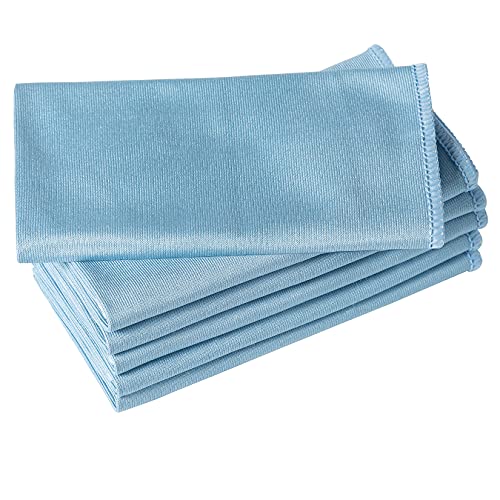

Microfiber Glass Cleaning Cloths, 6 Pack
Large, lint-free microfibre cloths designed for streak-free glass, mirrors and stainless steel.
- 6 cloths
- 16 x 16 in
- Lint-free weave
- Machine washable
- ✅ Streak-free finish
- ✅ Large size
- ✅ Reusable
- ❌ Wash without fabric softener
How Do You Clean a Bathroom Mirror Step by Step?
Remove spots first, then clean the whole surface with a light mist of cleaner on your cloth, wiping in an S pattern from top to bottom, and finish by buffing dry with a second cloth. Work in sections on large mirrors so the cleaner doesn’t dry before you wipe it.
- Clear the area. Move toiletries off the counter and close nearby cabinets.
- Spot treat. Dab toothpaste, hairspray and makeup spots with a cotton pad or cloth dampened in rubbing alcohol. Let it sit a few seconds and wipe away.
- Dust the surface. Wipe the mirror lightly with a dry microfibre cloth to remove dust and loose particles.
- Apply cleaner to the cloth. Spray a light mist of vinegar solution onto the cloth to avoid drips running behind the frame.
- Wipe in an S pattern. Start at the top left, move across, drop down and come back, overlapping slightly.
- Buff dry. Immediately buff with a dry microfibre cloth using small circles until no film remains.
- Check from an angle. Look at the mirror from the side with a light on to spot any remaining streaks.
What Is the Best Homemade Mirror Cleaner?
A simple mix of one part white vinegar to one part distilled water cleans most mirrors effectively. For extra grease-cutting power, add a tablespoon of rubbing alcohol per cup. Use distilled water rather than tap water to avoid mineral spots. Skip dish soap; it leaves a residue that causes streaks.
| Cleaner | Best for | Notes |
|---|---|---|
| Vinegar + distilled water | Everyday cleaning | Cheap, effective, ammonia-free |
| Rubbing alcohol | Hairspray, toothpaste, makeup | Evaporates quickly, streak-free |
| Witch hazel | Light film, fingerprints | Gentle alternative to alcohol |
| Commercial glass cleaner | Convenience | Choose ammonia-free for tinted or antique mirrors |
| Plain water + microfibre | Quick daily wipe | Works surprisingly well with good cloths |
How Do You Remove Hairspray From a Mirror?
Hairspray leaves a sticky, cloudy film that vinegar alone struggles with. Wipe the mirror with a cloth dampened in rubbing alcohol, which dissolves the polymers in hairspray, then follow with your usual vinegar clean and buff dry. Repeat if the film is thick.
How Do You Remove Hard-Water Spots?
Mineral spots from splashes need an acid to dissolve them. Soak a cloth in undiluted white vinegar, press it on the spots for a few minutes, then wipe and rinse with a cloth dampened in distilled water. Buff dry. For heavy deposits, repeat rather than scrubbing with abrasives, which can scratch the glass.
How Do You Stop a Bathroom Mirror From Fogging?
Improve ventilation by running the extractor fan during and after showers or opening a window. For an anti-fog film, rub a tiny amount of shaving cream or a drop of dish soap over the dry mirror, then buff it off completely with a clean cloth; the invisible layer helps prevent condensation from beading. Heated mirror pads are a permanent solution.
How Do You Clean Mirror Edges and Frames?
Mirror edges are where moisture causes “desilvering,” the black spots that creep in from the sides. Never spray cleaner directly at the edges, and dry them thoroughly after cleaning. Wipe metal frames with a damp cloth and dry them; dust wooden frames and avoid getting them wet.
Black-framed or arched mirrors like the Sweetcrispy arched mirror just need a damp microfibre wipe on the frame.
Does Newspaper Really Clean Mirrors Better?
It was a popular trick when newsprint used oil-based inks and heavier paper, but modern newspaper ink can rub off onto frames and grout, and many papers now leave fibres behind. A good microfibre cloth does the same job more reliably and can be washed and reused hundreds of times.
Is Steam Cleaning Safe for Mirrors?
A handheld steam cleaner with a window attachment can loosen stubborn residue on the glass itself, but keep steam well away from the edges and backing, and squeegee and dry immediately. In most bathrooms, alcohol and vinegar do the job without the risk of forcing moisture behind the mirror.
How Do You Clean Mirrored Cabinet Doors?
Mirrored medicine cabinets get fingerprints around the edges where they’re opened. Clean the face with the same S-pattern method, then wipe the edges and hinges with a barely damp cloth and dry them. Open the door and clean the inside shelves at the same time so dust doesn’t fall onto the clean glass.
What Should You Never Use on a Mirror?
Avoid abrasive pads and powders, scouring sponges, newspaper (modern inks can smear), paper towels that shed lint, bleach, and harsh ammonia cleaners on antique or tinted mirrors. Never spray liquid directly onto the mirror, as it can seep behind the glass and damage the silver backing.
How Do You Fix Black Spots on a Mirror?
Black or grey spots near the edges are desilvering: moisture or harsh cleaners have damaged the reflective backing. They can’t be cleaned away. You can slow further damage by keeping edges dry and sealing them with clear edge sealant, hide small spots with a frame, or replace the mirror if the damage spreads.
Prevention is the only real cure, which is why spraying the cloth instead of the glass matters so much in humid bathrooms.
How Do You Clean an LED or Lighted Mirror?
Switch the mirror off and let it cool. Wipe the glass with a barely damp microfibre cloth and a little vinegar solution, avoiding the light strips, touch sensors and any gaps. Dry immediately. Never spray liquid near the electrics, and check the manufacturer’s care instructions for anti-fog pads.
How Do You Clean an Antique or Tinted Mirror?
Antique mirrors have delicate, older silvering, and tinted or bronze mirrors may have coatings sensitive to ammonia. Use only a slightly damp microfibre cloth or a very mild vinegar solution, avoid commercial cleaners with ammonia or alcohol near the edges, and dry immediately. Treat gilded frames with a dry, soft brush only.
How Do You Keep Your Cleaning Cloths Working?
Microfibre cloths lose their streak-free performance when clogged with soap, lotion or fabric softener. Wash them separately in warm water with a small amount of detergent, skip fabric softener and dryer sheets, and air dry or tumble on low. Keep a dedicated set just for glass so they don’t pick up grease from other cleaning jobs.
Replace cloths when they start leaving lint or feel stiff; a fresh cloth often solves “mysterious” streak problems instantly.
Quick Daily Routine for a Spotless Mirror
- Keep a dry microfibre cloth in a drawer near the sink.
- Wipe splashes after brushing teeth, while they’re still wet.
- Run the fan for 15–20 minutes after showering.
- Spray hair products away from the mirror.
- Do a full vinegar clean once a week.
How Often Should You Clean a Bathroom Mirror?
A quick wipe with a dry or damp microfibre cloth every couple of days keeps splashes from building up. Do a full clean weekly, and tackle hairspray or hard-water spots as soon as you notice them. Wash your microfibre cloths without fabric softener, which coats the fibres and causes streaks.
How Do You Clean Shower Doors and Glass Near the Mirror?
Glass shower screens collect soap scum and limescale rather than toothpaste, so they need a slightly stronger routine: a vinegar spray left for a few minutes, a soft non-scratch sponge, and a squeegee after every shower to stop spots forming. Keep separate cloths for shower glass so scum isn’t transferred to the vanity mirror.
Wiping the shower glass and the mirror on the same day keeps the whole bathroom looking bright and makes it easier to spot where water splashes are coming from.
How Do You Clean a Large or Hard-to-Reach Mirror?
Use a squeegee with a microfibre sleeve or an extendable glass cleaning tool for tall mirrors above vanities. Work from top to bottom in vertical strokes, wiping the squeegee blade after each pass. Use a stable step stool rather than leaning across a counter.
How Do You Clean Toothpaste Splatter and Fingerprints in a Kids’ Bathroom?
Bathrooms used by children collect a different kind of mess: dried toothpaste flecks, sticky fingerprints at child height and soap splashes on the lower half of the mirror. Dried toothpaste does not wipe away easily with a dry cloth and can smear into a white haze. Soften it first by holding a warm, damp microfiber cloth against the spots for a few seconds, then wipe and follow with your usual glass cleaner. For fingerprints, a small amount of rubbing alcohol on a cloth cuts the oils quickly and evaporates without streaking. Keeping a dedicated mirror cloth in a drawer and showing children how to wipe the sink area after brushing reduces the buildup between cleanings, and a quick daily wipe of the lower half of the mirror takes only seconds.
How Do You Clean Magnifying and Makeup Mirrors?
Small vanity and magnifying mirrors show every streak and speck, and they often have chrome frames, swivel joints or built-in lights. Spray cleaner onto a cloth rather than the mirror so liquid does not seep into hinges or electronics. Wipe the glass in one direction, then buff with a dry corner of the cloth. Makeup residue such as foundation and powder may need a drop of dish soap in warm water first, followed by a clean, damp cloth and a dry buff. Wipe chrome frames separately with a soft cloth to avoid water spots, and for lighted models, unplug or switch off before cleaning and keep moisture away from the switch and charging port.
Bottom Line: How to Clean a Bathroom Mirror
Spot clean toothpaste and hairspray with rubbing alcohol, then mist a vinegar and distilled water solution onto a microfibre cloth, wipe in an S pattern and buff dry with a second cloth. Keep liquid away from the edges, avoid paper towels and abrasives, and use good ventilation to cut fog. Shopping for a new mirror? See our guide to the best wall mirrors.
Frequently Asked Questions
What is the best thing to clean a bathroom mirror with?
A 50:50 mix of white vinegar and distilled water on a microfibre cloth, buffed dry with a second cloth.
Why is my mirror still streaky after cleaning?
Too much cleaner, a dirty cloth, paper towel lint or hard tap water usually cause streaks.
How do you get hairspray off a mirror?
Wipe with rubbing alcohol, then clean normally and buff dry.
Is vinegar safe for mirrors?
Yes, diluted vinegar is safe for glass; just keep liquid away from the edges.
How do you stop a mirror from fogging up?
Use the extractor fan, or apply a thin layer of shaving cream and buff it off.
Can you use paper towels on mirrors?
It’s better not to; they leave lint and streaks. Microfibre works best.